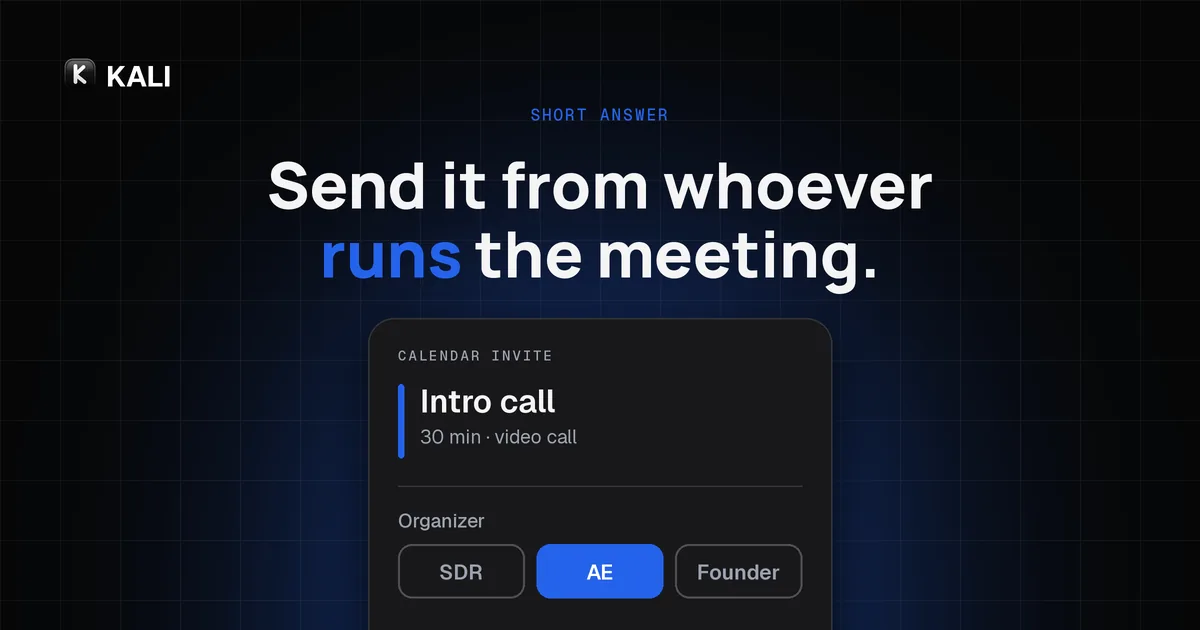
Short answer: send the invite from the person who will run the meeting. In most teams that is the account executive, not the SDR who built the list. For early-stage companies and senior buyers, it is often the founder. The organizer’s name is the first thing a prospect sees on their calendar, and when the person who invited them is not the person who shows up, trust and attendance both drop.
Why the Organizer Matters More Than in Email
In a cold email, the sender is one line in an inbox. In a cold calendar invite, the organizer is attached to the event itself. It appears on the prospect’s calendar, in their reminders, and in the meeting window on the day. The prospect decides whether to accept partly on who is asking, and they decide whether to show up partly on whether they remember that person.
That makes the sender a bigger decision in calendar outreach than in almost any other channel.
SDR vs AE vs Founder
| Sender | Works best when | Watch out for |
|---|---|---|
| SDR | The SDR runs a short qualifying call before handing off | Prospects who expect the expert and get a handoff |
| AE | The AE runs the first meeting, which is the usual case | AE calendars filling up with unqualified meetings |
| Founder | Early-stage companies, senior buyers, strategic accounts | Founder time, and scaling beyond a small list |
When Each One Makes Sense
The AE is the default for most B2B teams, because the AE runs the first real meeting. The invite, the reminder and the person in the room all match. Pair it with clear qualification in your targeting so the AE’s calendar does not fill with poor-fit meetings.
The SDR makes sense when your process genuinely starts with a short discovery call run by the SDR. Be honest in the invite about what the meeting is. A prospect who accepts a “15 minute intro” and gets one is fine. A prospect who expects a demo and gets a qualifying call is not.
The founder works well for founder-led sales, enterprise buyers who respond to seniority, and strategic accounts. It does not scale to large lists, so reserve it for the accounts where the name carries weight. Our post on cold calendar invites for founder-led sales goes deeper.
What About a Shared or Brand Account?
Avoid sending from a generic address such as “sales@” or a team account. An invite from a role address reads as automated, gives the prospect no person to recognise, and makes the day-of meeting feel anonymous. Always invite from a named person.
If Someone Else Will Run the Meeting
Plans change. If the person who sent the invite will not be the one in the room, tell the prospect before the meeting, by name, and add the new person to the event rather than sending a new invite. A short note avoids the surprise that causes people to drop off the call.
FAQ
Can an SDR send invites on behalf of an AE? Yes. The SDR can do the work while the invite comes from the AE’s calendar, which keeps the organizer and the person in the meeting the same.
Should the founder send every invite at an early-stage company? For the first few hundred prospects, often yes. As volume grows, move most invites to AEs and keep the founder for senior and strategic accounts.
Does the sender affect deliverability? The sending account matters more than the person’s title. Make sure it is properly set up and warmed up before it sends invites.
KALI sends invites from the right person for each prospect as part of a managed service. See how it works.