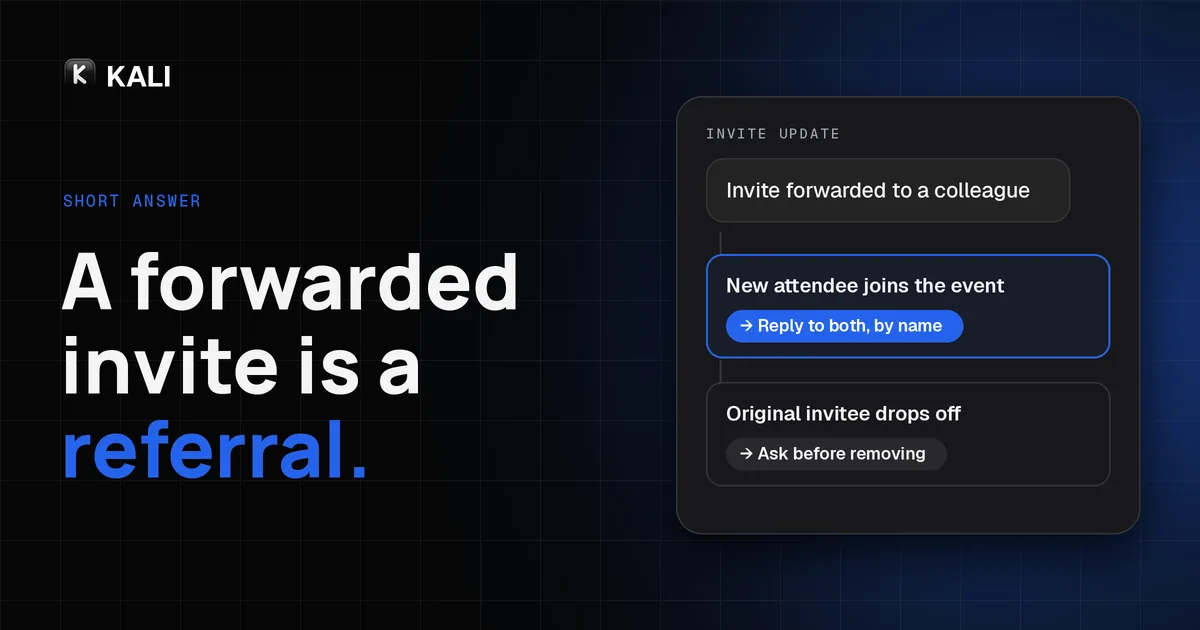
Short answer: treat a forwarded invite as a referral, not a lost meeting. Within a business day, reply to both the original prospect and the new person by name, confirm who is attending and what they want from the call, and adjust the meeting to the person who will actually be there. A forward usually means the topic landed but you reached someone one step away from the owner.
What a Forward Usually Means
A prospect who forwards a cold calendar invite has read it, decided it matters to the company, and chosen a colleague to handle it. That is more engagement than a silent accept. What it means depends on what happens to the original invitee.
| What you see | What it usually means | What to do |
|---|---|---|
| Colleague added, original still attending | They want a second opinion or the hands-on owner in the room | Welcome both, plan questions for each |
| Colleague added, original declines | They handed it off to the person who owns the problem | Re-anchor the meeting on the new person |
| Forwarded to a manager | They are interested but cannot decide alone | Prepare for a more senior, shorter conversation |
| Forwarded to an assistant | Someone else manages their calendar | Work with the assistant on timing, not on the pitch |
How to Respond
1. Notice it. Outlook typically sends the organizer a meeting forward notification. In Google Calendar, a forwarded guest may simply appear on the guest list when they respond, depending on the event’s guest settings. Check attendee lists on upcoming meetings rather than relying on notifications alone.
2. Reply to both people by name. A short note works best: thank the original prospect, introduce yourself to the new person, and restate in one sentence why the meeting exists. Ask the new person what they would most like to cover.
3. Keep it on the same event. Do not send a brand new invite. Make sure the new person is properly on the existing event so they receive updates and reminders. If the original prospect has dropped off, ask whether they would like to stay on before removing them.
4. Re-plan the meeting. The new attendee may have a different role, different problems and less context than the person you targeted. Research them before the call and adjust your questions.
5. Confirm the day before. Send the confirmation to everyone on the event. Forwarded attendees are the most likely to have forgotten why the meeting is on their calendar.
What Not to Do
- Do not ignore the change. Running the meeting as if the original prospect were there confuses everyone.
- Do not go around the new person. Emailing the original prospect to “check if they can still join” can read as dismissing their colleague.
- Do not treat it as a rejection. The original prospect could have declined and chose to pass it on instead.
Running the first meeting well matters even more after a forward. Our guide to running the first meeting a cold calendar invite booked covers the call plan.
FAQ
Should I add the original prospect back if they removed themselves? Not without asking. Offer to keep them updated instead, and let the new attendee lead.
Does a forward count as an accepted meeting in reporting? Track it separately. Forwards are a useful signal about your targeting, because they show you reached someone adjacent to the real owner.
What if the forward goes to someone outside my target profile? Hold the meeting anyway, ask how decisions like this are made, and use the call to find the right person.
KALI tracks attendee changes and handles replies as part of a managed service, so forwarded invites get answered quickly. See how it works.